

Sponsored content by Profile Products
A pitching mound takes more abuse than any other area of the baseball field. Between bullpens, pregame routines, and live innings, it’s under constant stress—and small issues can quickly turn into safety or performance concerns if they’re ignored.

- Where it Matters Most: Consistent mound maintenance starts with understanding and prioritizing the most vulnerable areas for breakdown. The landing area in front of the rubber, the push-off zone, and the front slope all see concentrated wear. Daily attention to these spots goes a long way toward preventing larger repairs later.
- Preparing the Surface: After play, loose material should be removed and the surface lightly scarified to promote bonding. Those repairs are most effective when done in thin lifts, compacted thoroughly before adding more material. Trying to rush the process with thick layers is likely to undo the critical, foundational work and often leads to soft spots, cleat marks, and premature failure.
- Fundamental Techniques: Moisture management is equally critical. Packing clay needs enough water to stay plastic and bind properly, but excess moisture can create slick conditions or slow compaction. Many experienced crews finish repairs by sealing the surface with a thin layer of infield conditioner and covering the mound when it’s not in use to lock in moisture and protect their work.
- Choosing the Right Products: When deeper repairs are needed, starting with a high-quality mound clay designed for durability and plasticity makes the job easier—and the results more consistent. Newer formulations, like Turface Elite Mound Clay™, are designed to hold shape under repeated use while remaining workable for crews maintaining high-level fields.

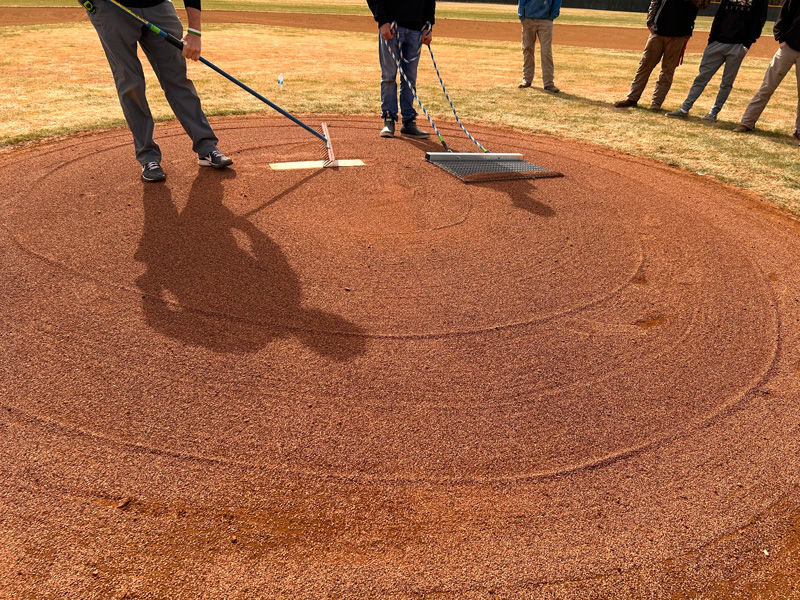

Ultimately, the goal isn’t just a mound that looks good before first pitch. It’s a surface that provides firm footing, consistent landings, and confidence for pitchers and field managers alike. With the right materials and a disciplined maintenance routine, mounds can stay game-ready far longer—even during the busiest parts of the season.