
Sponsored content by ECHO Robotics
Robotic mower maintenance is what keeps your ECHO Robotics mower cutting cleanly season after season, instead of sitting in the shop mid-summer. Treat it like you would a piece of sports turf equipment: small checks on a set rhythm, plus one deeper service each year. It seems very easy to forget any maintenance as the equipment operate autonomously.
Done right, you get longer component life, fewer stoppages, and better turf quality on everything from a Little League outfield to a golf course rough.
Why ECHO Robotics mowers pay off
Robotic mowers bring a few advantages that show up fast in day-to-day operations:
- consistent cut quality because the mower runs more often, taking less off each pass
- lower labor pressure for routine mowing on large properties and multi-field complexes
- quieter operation and no on-site gasoline handling
- finer clippings that feed the turf (mulching effect), which helps surface quality over time
A simple maintenance rhythm that extends service life

Build a routine that matches your site. A sports complex with 3–10 acres and heavy traffic needs more frequent checks than a single 0.5-acre lawn.
Daily or 2–3 times per week (busy sites like soccer/football complexes)
- do a quick walk-around for damage, loose fasteners, and wrapped debris on the wheels
- brush off grass buildup under the deck and around the cutting head
- wipe sensors with a damp cloth
Weekly
- check blades for nicks, missing screws, or bending
- clean charging contacts on the mower and dock so charging stays
- look for ruts, holes, and low spots that can hang up the mower; fill them or mark them as no-go zones
Every 8–12 weeks
- replace blades (most sites land in this window, sooner in sandy soil or after storms)
- inspect wheels and front casters for wear and clean tread so traction stays predictable
Seasonally + once per year
- review and adjust maps as well as schedules,
- Software and firmware should updates automatically to solve issues or add new functionalities, always good to check with your dealer before peak growth
- book an annual service with a trained tech for a full inspection (drive system, deck, seals, safety checks)
Cleaning rules that prevent damage
Mud and wet clippings can corrode hardware and mess with sensors over time, so cleaning matters. Skip the shortcuts:
- avoid water and especially pressure washers; water driven into bearings and electronics can cause expensive problems
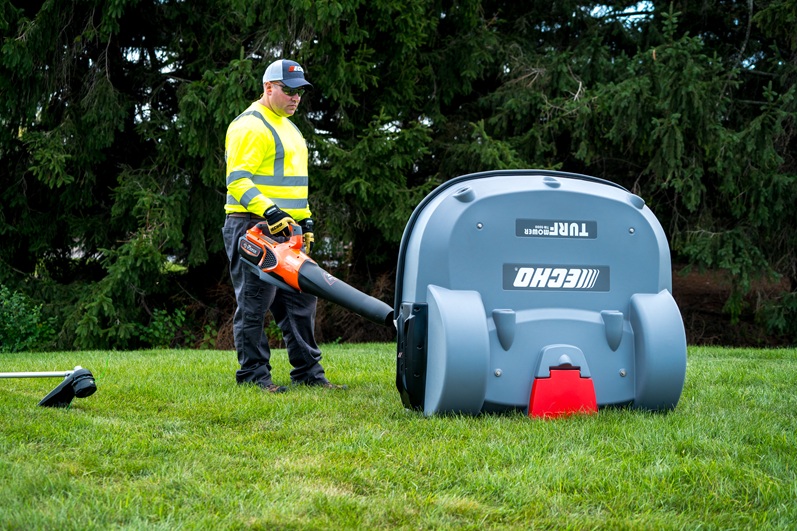
- use a leaf blower (preferably an ECHO one), brush, plastic scraper, and compressed air for packed debris
- keep chemicals away; harsh cleaners can attack plastics, seals, and coatings
Winterization for US conditions

Plan winterization when night temperatures sit around 50°F (10°C) or lower and turf growth slows. Give the site one last cleanup cut, around 1.5–2 in, so grass doesn’t mat down under snow
Winterization checklist
- clean the mower fully and dry it before storage
- Remove the old blades (wait until the start of the season to place the new ones)
- charge fully the battery, then power off the unit with the hard switch before storage
- store the mower (or at least the battery) indoors in a cool, dry spot above freezing
- handle the charging station per setup; many crews leave the station in place and cover it to protect it from snow and pests. Disconnect the power to prevent any heat generation and become the winter cottage for rodents.
- The GPS-RTK base can be disconnected, but do not move it to avoid reinitializing the location setup next spring.
Stick to this robotic mower maintenance routine and your ECHO Robotics mower will keep delivering clean lines, reliable runtimes, and fewer surprise repairs when spring ramps up.