

Sponsored content by Echo
Robotic mowers help you keep sports fields and green spaces game‑ready without tying up staff. On U.S. campuses—from K‑12 to D1—these systems deliver consistent cut quality, safer footing, and quiet, low‑emission operation.
Why robotic mowers fit campus fields
- safer surfaces: frequent, even cuts reduce clumps and trip points
- more field time: mow overnight or on weekends so fields are open for PE, practice, and games
- silent by design: ~52 dB measured at 3 ft, so you can mow near dorms or classrooms without disruption
- less turf stress: lightweight units limit rutting and compaction compared to heavy equipment
Precision mowing, straight lines
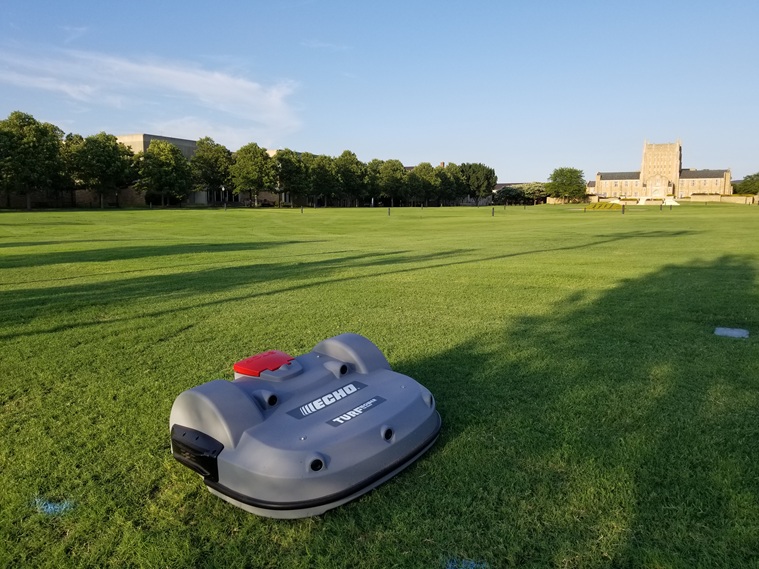
Modern units use GPS RTK guidance to hold about 1‑inch accuracy. That lets the mower track straight lines with minimal overlap and a clean, professional finish. Pattern mowing is faster and can cover more acres in less time. The pattern can be adjusted to meet your line paintings and keep these lines sharp on football, soccer, and lacrosse fields.
- typical mowing height range: 0.75–4 in (football in season often 1.5–2.5 in; soccer 1–2.25 in)
- mowing widths around 17–41 in depending on model
- single robot capacity: up to ~15 acres maintained, site‑dependent
- a striping roller is available on the TM-2050 for perfect stripes
Fits your schedule (and your app)
You set schedules in an app and monitor performance from your phone or desktop. Coordinate with irrigation so mowing resumes once turf is dry. During breaks or holidays, keep fields on a light program so they reopen with a fresh cut.
- run at night to keep varsity practice open after school
- target high‑wear zones on baseball outfields and multi‑use rec fields
- adjust zones for band practice lines or temporary events
Safety and compliance on campus
- obstacle detection and stop functions add a layer of protection
- lower noise helps with quiet hours and testing windows
- emissions‑free operation supports campus sustainability goals
Maintenance and operating savings
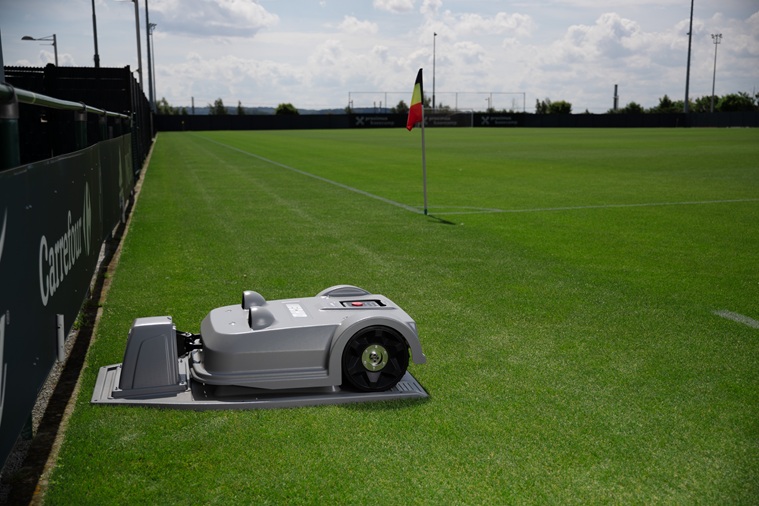
You reduce fuel use, weekend overtime, and time spent on repetitive passes. Staff can shift to aeration, topdressing, and infield work that raise playability.
- fewer operator hours on routine mowing
- consistent mulching returns fine clippings to the canopy, supporting turf health and appearance all season
Example campus use cases
- high school football stadium + practice soccer field: schedule overnight cuts at 1.75–2.0 in and a lighter weekday trim before Friday night
- university intramural complex: divide zones so one unit covers five to seven acres across rectangles and softball outfields
- K‑8 grounds: quiet daytime mowing near classrooms; shift to night near the playground
- typical ECHO 4G RTK base covers about a 8‑mile radius in U.S. One RTK base can serve many robots which makes it a perfect solution for large campus or multiple sites
- The robots fleet management app or desktop portal allows the greenkeeper to assign mowing patterns, set heights, and monitor status across the whole property

Quick advantages to share with stakeholders
- up to 1‑inch positioning for straight‑line mowing
- no boundary wire when using RTK‑based wireless setup
- app control from anywhere
- consistent cut, year‑round
- safer footing thanks to even height and fewer ruts
- lower on‑site emissions and reduced energy use vs. gas mowers
- more usable field hours for students and teams
Specs and capacities vary by model and site conditions. Coordinate with your dealer to size systems for your fields.