
Sponsored content by STEC Equipment
Turf professionals are no strangers to the debate between synthetic and natural turf. But for those who are responsible for day-to-day upkeep, the question to consider isn’t just which surface is better. Rather, it’s how to safely and efficiently maintain each one properly.
Both surface types offer unique advantages and disadvantages, and both demand specific tools and techniques to ensure they remain visually presentable and safe. Whether it’s a natural field battling high-use wear or a synthetic surface hiding debris, the maintenance challenges turf professionals will face are both real and continuously growing.
Natural Turf: Living Systems Require Living Strategies
Natural grass fields demand constant attention and maintenance. You’re not just maintaining your surface, you’re managing a living system. Soil health, irrigation, compaction, disease, insects, mowing, fertilization, and seasonal renovation all come into play.
One of the biggest challenges with natural turf is maintaining surface quality while also working with the use and demands of the end user. Regular use can lead to thinning and compaction, resulting in uneven footing. With this in mind, timely aeration and renovation are critical for the longevity and safety of natural surfaces.
Tools like the GKB Combitool provide turf professionals with a multi-functional solution for aeration, dethatching, and surface leveling. Machines like the GKB VCollector help manage organic buildup and improve infiltration. For natural turf management, even with the right equipment, there is more to consider. Turf professionals know that properly managing this kind of surface is about timing, observation, and quick responsiveness to environmental stressors. Factors ranging from weather and weed infestation to insecticide damage, or even just the sunscreen players spray on fields, affect your playing surfaces.

Synthetic Turf: Low-Growth, Not Low-Maintenance
Synthetic fields may not require the same mowing, watering, or fertilization that natural surfaces do, but they’re far from being maintenance-free. Surface hardness, cleanliness, and drainage issues require routine attention from turf managers.
Synthetic turf can easily compact over time without proper upkeep. This results in harder, less forgiving surfaces that can increase the risk of player injury. Infill must be redistributed and debris removed to keep fields game-ready.
Equipment like the GKB Deep Clean helps remove debris and contaminants from within the infill and top surface, and the GKB TopClean is good for cleaning the top surface and helping to stand the “leaves” of the field back up. The GKB Combitool, previously mentioned, is also good for synthetic surfaces. It can help with compacted, high-wear synthetic areas and decompact, redistribute, and level out infill. It can also be used to remove painted lines and logos when needed.
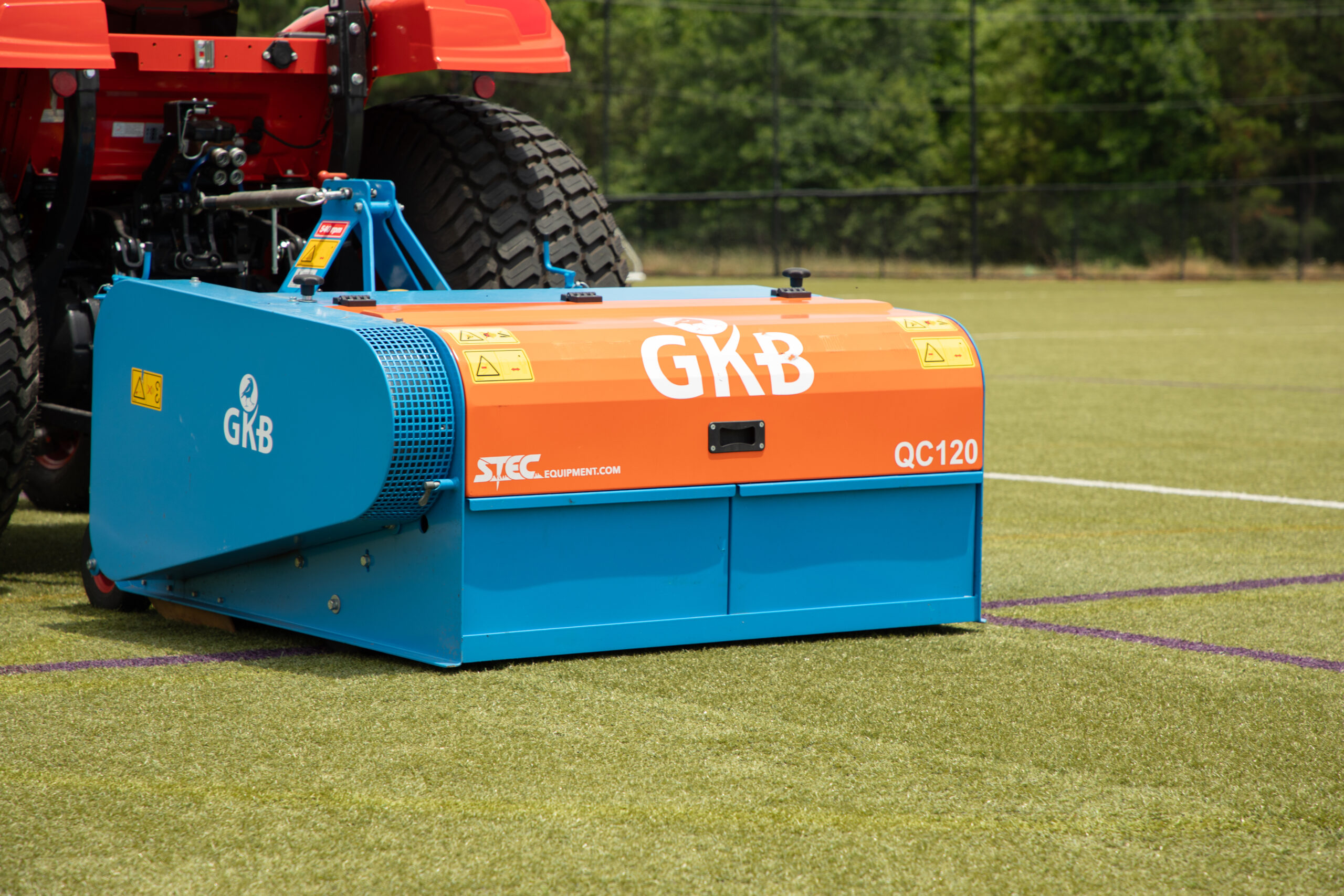
At STEC, our turf professionals often refer to synthetic surfaces as “maintenance that doesn’t disappear.” While you may eliminate some of the traditional turf chores, you will be accumulating a new set of worries. You will need to consider trash that hides in fibers, concerns about surface heat, and potential long-term wear that’s not easy (or cheap) to fix.
Heat, Safety, and Environmental Concerns
Synthetic surfaces are known to get significantly hotter than natural grass. On sunny days, surface temperatures reach anywhere from 120°F to upwards of 160°F. This poses serious heat risks. Watering may offer temporary relief, but field managers should monitor surface temperatures regularly. Especially during high heat index conditions.
By contrast, natural grass rarely exceeds 90°F, even under direct sun. This makes it a naturally cooler option for player safety. However, natural fields require downtime for recovery, along with the ongoing care for the living system.
Shared Challenges Across Both Surface Types
While natural and synthetic fields differ in construction, some of their biggest problems often overlap. This includes compaction, drainage, and overuse from overlapping sports seasons or even special events.
Both field types bring unique risks when hosting events like graduations or concerts. For synthetic, burns from fireworks and surface contamination can be permanent. For natural fields, prolonged foot traffic or heavy staging can damage grade and sod, which can potentially require full renovation. Proper planning and recovery schedules are essential regardless of the surface type you are maintaining.
Additionally, both surfaces need specialized equipment tailored to the specific field’s needs. A typical synthetic turf arsenal may include sweepers, vacuums, sprayers, and groomers. For natural turf, mowers, aerators, spreaders, and sprayers are all vital pieces to consider.
What It All Comes Down To: Expertise + Equipment
In the end, both surfaces require dedicated and knowledgeable management. Natural turf is a living, changing organism. Synthetic is a complex, manufactured system. Neither is easier nor maintenance-free, just different.
At STEC Equipment, we work closely with sports turf professionals across the country to match equipment to real-world challenges. Our solutions are built to perform under pressure and support the skill and hard work that goes into every well-maintained field.
Because whether it’s natural grass or synthetic, your field is a reflection of your expertise, and we’re here to help you protect it.