

By Mary Helen Sprecher
Year after year, track and field remains among the top 10 most popular sports at the high school level, according to participation data from the National Federation of State High School Associations.
Although tracks and fields are two separate types of sports facilities, the fact that they are co-located means that responsibility for caring for both generally falls on the same person.
The question then becomes “Is the facility in meet-ready condition?” Seasons of use and exposure to weather can take their toll, say those who build and repair tracks for a living. And if the coach, athletic director or maintenance person is not aware of problems, things can quickly get out of hand.
“I think the school or coach should inspect the track weekly or every other week for the safety of the athletes,” said John Schedler of Baraka Sport in Fort Worth, Texas. “Taking photos of issues, even if they just look like minor concerns, can be very important. Get the questions into an expert’s hands to evaluate.
“Small issues become big problems if not identified early,” Schedler added. “Thanks to mobile phones, everyone has a camera in their back pocket.”
Regular walk-throughs can reveal any number of problems in the making. However, those inspections are only as good as the attention that is actually paid to the track throughout the time spent there.
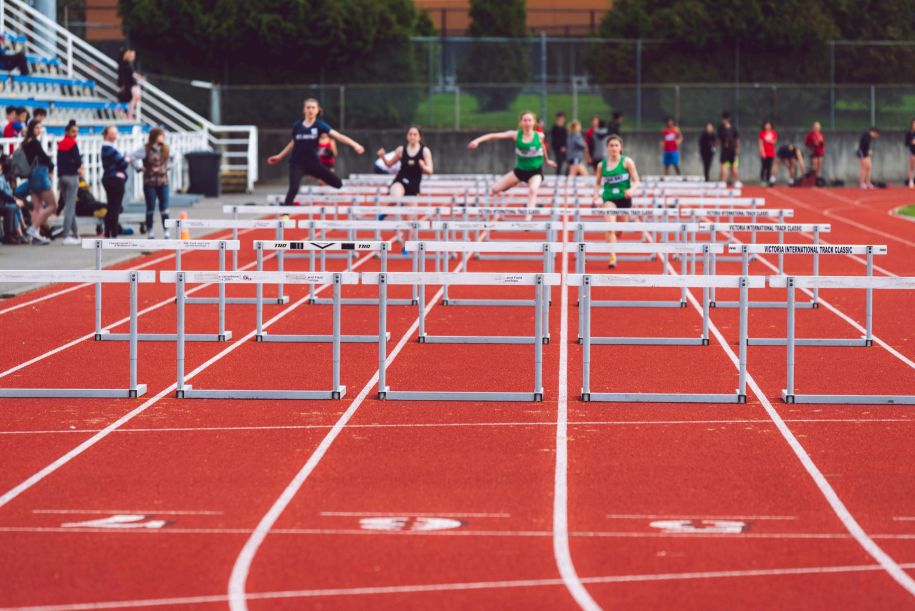
Schedler recommends a checklist of items to look for:
- Delamination or any movement or change at the edges of the track. “Sometimes, track systems can pull and relax with temperature fluctuation, and that can really cause issues with the surface.”
- Bubbles on the surface. “Moisture and heat can cause sealed or solid systems to bubble.”
- Surface fading. “Chalking is the common term for situations where polyurethane fades and becomes dusty looking. In some systems, the rubber granules on the surface will start to come off or detach at a frustrating rate. There may also be bald spots or areas where the texture has changed noticeably.”
- Striping wear. “This can be caused by the fading or wear of the track system, which can make it appear as though the striping is disappearing.”
- Uneven areas of the track. Contractors advise owners and managers to look down the length of the track from each bend. Does the surface appear flat and even, or are you noticing what appear to be waves, or rises and falls, in the track? (Also, if water gets on the track, does it collect in a puddle somewhere?) In all cases, take photos of problem areas and send them to the track installer or contractor. Pros advise against looking up problems on the internet and trying DIY fixes; some may void the warranty and/or make the problem worse.
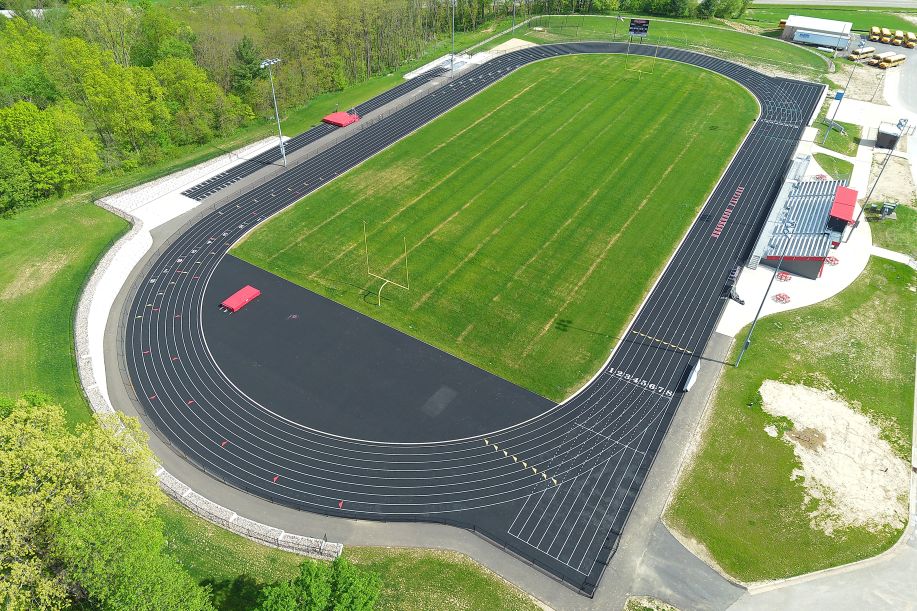
In addition to keeping on top of changes in the track, there are things to be aware of that can shorten the lifespan of the surface.
- Encroaching grass or weeds. “The most destructive maintenance issue we see that is frequently overlooked until it is too late is vegetative growth at the edge of the track that undermines the surface,” said Robert Cohen, of Robert Cohen Co., LLC Sport Surfaces Distributing, Inc. in Bernalillo, New Mexico. “Once weeds and grass become established, they embed themselves into the asphalt and become impossible to eliminate. Regular application of a spray herbicide at least annually, and also as weeds appear, will add years to the life of the track.”
- Wear caused by gates that sag and drag across the surface. Inspect regularly and repair all gateways that lead into the track area.
- Runners grinding debris into the surface. A leaf blower can help remove dirt, sand, gravel, twigs or anything else that might accidentally be brought into the track area on users’ shoes. Matting or grates near the entrances can assist with removal of debris from shoes.
- Use of incorrect footwear. Running shoes, such as those made for jogging, will not damage the track surface. If athletes want to wear spikes on the track, however, only the pyramid type should be allowed. Shoes with sharp spikes (either pin spikes or Christmas tree spikes) can damage the track surface and cause premature wear; that damage may not be covered by the manufacturer’s warranty.
- Heavy machinery on the track. Track installers can’t say it enough; if equipment such as mowers or any other vehicle needs to be brought onto the field, covering the track is imperative, and will help keep the surface intact. Many schools or facilities place boards over the track at crossing points for machinery or vehicles; the boards are then covered by rubber mats to provide traction. If the field will be used to host anything not sports-related (graduations, community events, etc.), pedestrian traffic should be directed onto the field only at those designated crossing points.
- Aggressive cleaning of the surface. Ask the installer for a list of the manufacturer’s recommendations regarding equipment and products that can safely be used on the surface, as well as directions on how to use them correctly.
- Excess water on the track. Sprinklers for irrigating the field should be directed so that water goes only onto the grass, rather than over-spraying and landing on the track. If there are integrated curbing/drainage systems between the track and the field, make sure they remain clear of any debris, so that water is moved off efficiently.
- Unsupervised facility use. It is easier to maintain control of footwear and other issues if track use is confined to student athletes; however, many facilities are open for community use. This increases the risk to the facility as a whole. Children, for example, will often bring tricycles, scooters, bikes, etc., onto the track while their parents walk or run, or users will allow their dogs to run on the field, none of which is desirable. If tracks (and fields) are open to the community (or even just to the rest of the student body while the track and field are not in active use), post a clear list of rules regarding hours open, footwear allowed, etc. Provide a number or email so that users can alert you if there are any issues with the track surface (or the field, should they notice problems there).
Mary Helen Sprecher wrote this article on behalf of the American Sports Builders Association (ASBA). For more information, see the ASBA’s Running Tracks: Construction and Maintenance Manual (www.sportsbuilders.org).