

The next FIFA World Cup is on the horizon, as Canada, Mexico and the United States prepare to host the biggest tournament in sport.
The FIFA World Cup 26 will take place over three countries for the very first time, with Canada, Mexico and the USA set to share hosting duties in a ground-breaking edition of sport’s greatest event.
A total of 16 stadiums have been chosen to host the games, the most since Korea/Japan 2002, with some truly spectacular venues set to showcase the best in the beautiful game.
Note: All listed stadium capacities are preliminary at this stage and subject to change prior to the tournament. Stadium names for the FIFA World Cup 26 have been matched with host city names and may differ from the common designation used locally.
CANADA
Toronto Stadium
Location: Toronto, Ontario, Canada
Opened: 2007
Capacity: 45,000Roof: Canopy roofFIFA World Cup 26 fixtures: Five group-stage matches and a Round of 32 tieTurfgrass: Kentucky bluegrass, hybrid reinforced fibersSod origin: Greenhorizons Sod Farms, Ontario
Pitch managers renovated the playing surface by installing a new rootzone and reinforcing the natural grass with 65 millimeters of synthetic fiber. Due to Toronto’s colder climate, the stadium employs grow lights and an underground heating system to maintain the playing surface. (pictured above)

BC Place Vancouver
Location: Vancouver, British Colombia, Canada
Opened: 1983
Capacity: 54,000
Roof: Dome
FIFA World Cup 26 fixtures: Five group-stage matches, a Round of 32 tie and a Round of 16 contest
Turfgrass: Kentucky bluegrass, perennial ryegrass blend, hybrid reinforced fibers
Sod origin: Bos Sod Farms, British Columbia
Replacing an artificial turf surface, sod for the stadium was grown on plastic at a sod farm and installed in the stadium over 20 centimeters of sand with a drainage layer and a system that can bring water in and pull it out of the turfgrass.
MEXICO

Mexico City Stadium
Location: Mexico City, Mexico
Opened: 1966
Capacity: 83,000
Roof: Open air
FIFA World Cup 26 fixtures: Three group-stage matches, a Round of 32 tie and a Round of 16 contest
Turfgrass: Kentucky bluegrass, perennial ryegrass blend, hybrid reinforced fibers
Sod origin: Seeded at the stadium in December 2025
For the first time ever, the stadium converted to a cool-season grass in preparation for FIFA World Cup 26. Previously, it used kikuyu grass, which is native to Kenya. The new grass is appropriate for the average highs and lows of Mexico City.
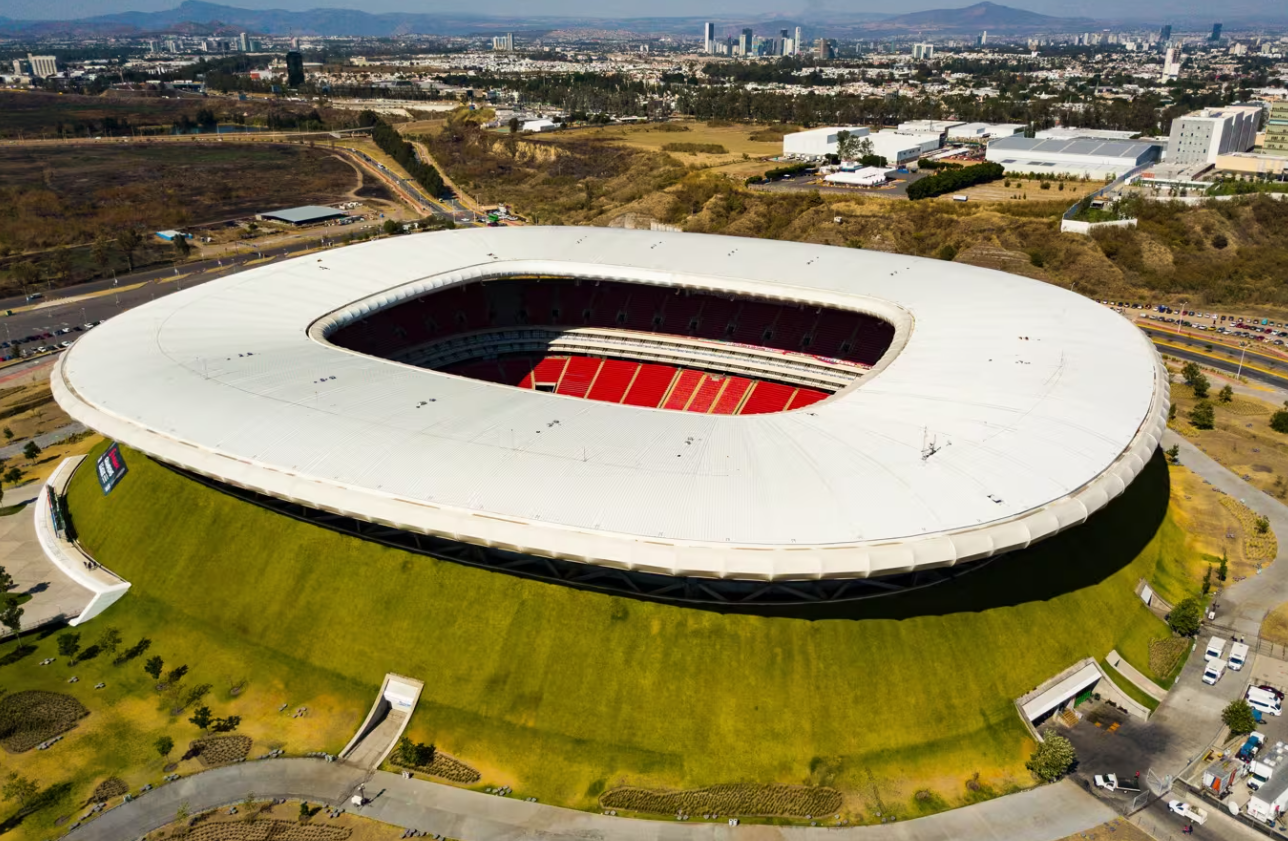
Estadio Guadalajara
Location: Zapopan, Jalisco, Mexico
Opened: 2010
Capacity: 48,000
Roof: Open air with overhangs for shade
FIFA World Cup 26 fixtures: Four group-stage matches
Turfgrass: Bermudagrass, hybrid reinforced fibers
Sod Origin: Pasto Santa Cruz, Mexico
Estadio Guadalajara stands out for its construction — built on raised ground with a coliseum-like design — and its pitch is also unique. Underneath the turfgrass, along with 30 centimeters of sand and a gravel layer, are drain lines that act like a bathtub. They can be closed to prevent water from draining away, and they can fill up to irrigate from below. Water can also be pumped in or vacuumed out to ensure the right amount of moisture for the pitch.

Estadio Monterey
Location: Guadalupe, Nuevo Leon, MexicoOpened: 2015
Capacity: 53,500FIFA World Cup 26 fixtures: Three group-stage matches and a Round of 32 tie
Roof: Open air with overhangs for shade
Turfgrass: Bermudagrass, hybrid reinforced fibers
Sod Origin: Pasto Santa Cruz, Mexico
Though the stadium has historically used bermudagrass, a pitch installed in 2025 uses a different variety of bermudagrass, researched by UT experts, that is stitched and reinforced with synthetic fibers. One challenge of the stadium is that the overhangs provided for spectator comfort create a lot of shade patterns, making the use of grow lights necessary even in summer.
USA

Atlanta Stadium
Location: Atlanta, Georgia, USA
Opened: 2017
Capacity: 75,000
Roof: Retractable dome
FIFA World Cup 26 fixtures: Five group-stage matches, a Round of 32 tie, a Round of 16 clash and a semi-final
Turfgrass: Kentucky bluegrass, hybrid reinforced fibers
Sod Origin: Green Valley Sod, Colorado
UT researchers devised a temporary build to cover the stadium’s usual synthetic turf. Aluminum flooring covers the turf and serves as the base for a drainage layer of gravel, an irrigation system, and 20 centimeters of sand. A refrigerated truck transported the sod in rolls that were stitched together inside the stadium. This domed venue will be used for a large number of matches, so grow lights are necessary to keep the turfgrass healthy for a longer period of time.

Boston Stadium
Location: Foxborough, Massachusetts, USA
Opened: 2002
Capacity: 65,000
Roof: Open airFIFA World Cup 26 fixtures: Five group-stage matches, a Round of 32 tie and a quarter-finalTurfgrass: Kentucky bluegrass, perennial ryegrass blend, hybrid reinforced fibersSod Origin: Tuckahoe Turf Farms, New Jersey
Originally a natural turfgrass stadium, Gillette Stadium changed to synthetic turf in 2006 but returned to natural turfgrass for FIFA World Cup 26. The synthetic turf was stripped down to the original layer of sand, which is the foundation for the hybrid-reinforced natural grass. Grow lights are on hand as a backup due to shade patterns made by spectator stands.

Dallas Stadium
Location: Arlington, Texas, USA
Opened: 2009
Capacity: 94,000
Roof: Retractable
FIFA World Cup 26 fixtures: Five group-stage matches, two Round of 32 ties, a Round of 16 contest and a semi-final
Turfgrass: Kentucky bluegrass, hybrid reinforced fibers
Sod Origin: Green Valley Sod, Colorado
The existing artificial turf was stripped down to the concrete floor to prepare for the installation of natural grass in the stadium. A layer of gravel helps with drainage, and 20 centimeters of sand form the base for the hybrid reinforced sod. Unlike most tournament venues, Dallas Stadium’s grow lights hang from the ceiling instead of being rolled out onto the pitch on rigs.

Houston Stadium
Location: Houston, Texas, USA
Opened: 2002Capacity: 72,000
Roof: RetractableFIFA World Cup 26 fixtures: Five group-stage matches, a Round of 32 tie and a Round of 16 contestTurfgrass: Kentucky bluegrass, perennial ryegrass blend, hybrid reinforced fibersSod Origin: Green Valley Sod, Colorado
The stadium is unique for its irrigation and drainage systems, which are built into the concrete floor that was originally constructed to accommodate modular synthetic turf systems. The replacement of its synthetic turf necessitated a layer of Permavoid — high-strength modular plastic cells used for drainage — and the field was built up with a geotextile fabric and sand.

Kanas City Stadium
Location: Kansas City, Missouri, USA
Opened: 1972
Capacity: 73,000
Roof: Open air
FIFA World Cup 26 fixtures: Four group-stage matches, a Round of 32 tie and a quarter-final
Turfgrass: Bermudagrass, hybrid reinforced fibers
Sod Origin: Carolina Green, North Carolina
The stadium’s playing surface was expanded to meet FIFA’s criteria for pitches, which is 344 feet by 223 feet. For FIFA World Cup 26, the synthetic turf was replaced with a gravel layer, a vacuum ventilation system, 30 centimeters of sand, and sod made of bermudagrass. The sod will be shallowly stitched so it can be easily removed for the NFL season.

Los Angeles Stadium
Location: Inglewood, California, USA
Opened: 2020
Capacity: 70,000
Roof: Fixed translucent
FIFA World Cup 26 fixtures: Five group-stage matches, two Round of 32 ties and a quarter-final
Turfgrass: Kentucky bluegrass, perennial ryegrass blend, hybrid reinforced fibers
Sod Origin: Desert Green Sod, Washington
The pitch synthetic turf pitch was covered with concert flooring to prepare for installation of natural turfgrass. To improve the spectators’ view, a 15-inch layer of Permavoid (high-strength modular plastic cells used for drainage) was added to the floor along with a geotextile fabric and 20 centimeters of sand.
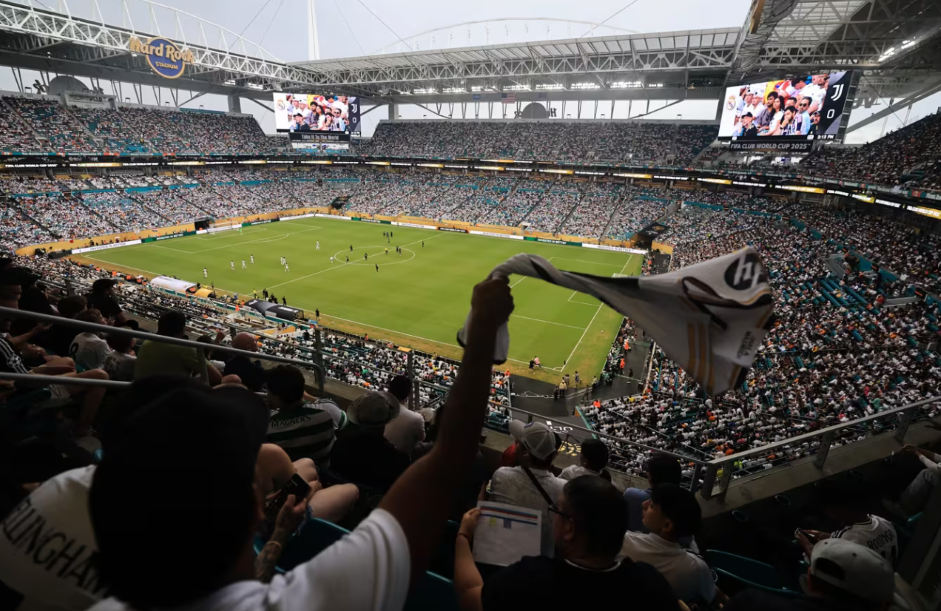
Miami Stadium
Location: Miami Gardens, Florida, USA
Opened: 1987
Capacity: 65,000
Roof: Open air with partial canopy
FIFA World Cup 26 fixtures: Four group-stage matches, a Round of 32 tie, a quarter-final fixture and the bronze final
Turfgrass: Bermudagrass, hybrid reinforced fibers
Sod Origin: Miami
Even though the stadium is in sunny Florida, grow lights are used to help combat the shade from the canopies above the spectator stands as well as the periods of rain that are common in Miami’s tropical climate. Unlike that in any of the other stadiums, the sod for Miami comes from its very own sod farm.

New York / New Jersey Stadium
Location: East Rutherford, New Jersey, USA
Opened: 2010
Capacity: 82,500
Roof: Open airFIFA World Cup 26 fixtures: Five group-stage matches, a Round of 32 tie, a Round of 16 contest and the FIFA World Cup finalTurfgrass: Bermudagrass, hybrid reinforced fibers
Sod Origin: Tuckahoe Turf Farms, New Jersey
A temporary pitch was laid over the artificial turf of the stadium, which will host the FIFA World Cup 26 championship match. Before the natural grass pitch was laid on a foundation of aluminum concert flooring, gravel, and sand, more than 1,700 seats were removed to widen the field and make it compliant with FIFA’s size requirements.
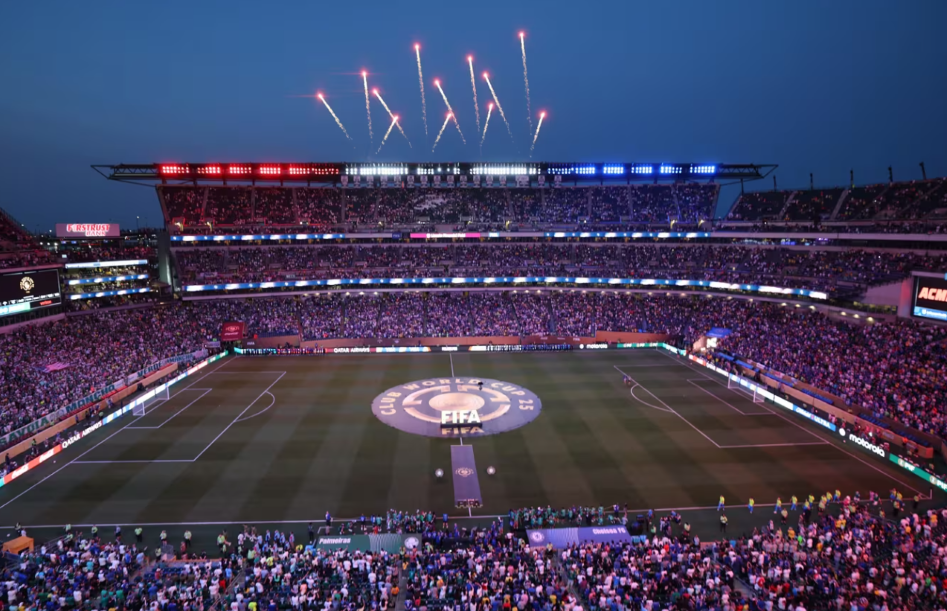
Philadelphia Stadium
Location: Philadelphia, Pennsylvania, USA
Opened: 2003
Capacity: 69,000
Roof: Open air
FIFA World Cup 26 fixtures: Five group-stage matches and a Round of 16 tie
Turfgrass: Kentucky bluegrass, perennial ryegrass blend, hybrid reinforced fibers
Sod Origin: Tuckahoe Turf Farms, New Jersey
The stadium will play host to a match on July 4, 2026—the 250th anniversary of the signing of the Declaration of Independence at Philadelphia’s Independence Hall,just five miles from the stadium. The pitch was installed over a foundation of gravel and 30 centimeters of sand. Grow lights will help the stadium maintain uniformity throughout the six matches scheduled for play.
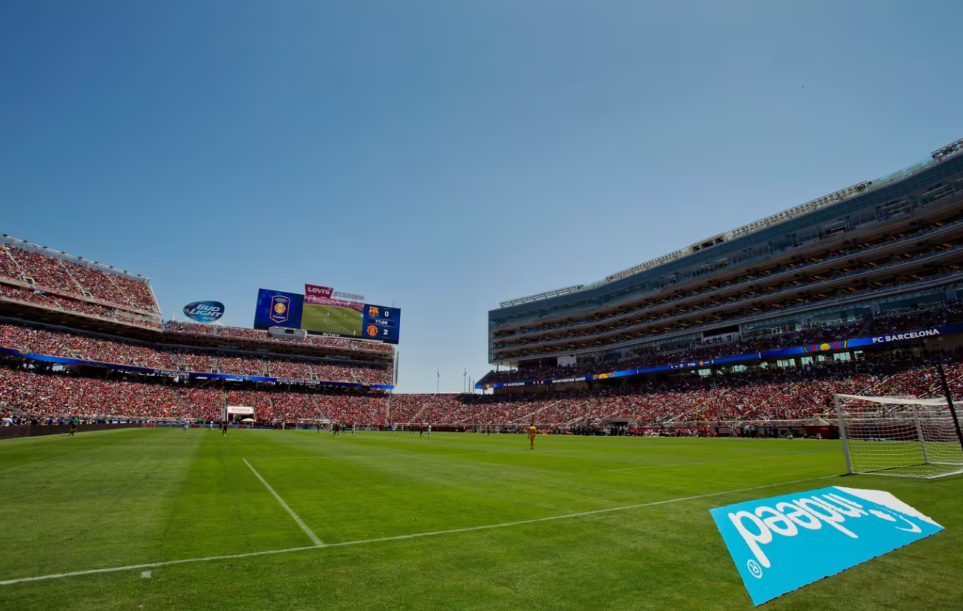
San Francisco Bay Area Stadium
Location: Santa Clara, California, USA
Opened: 2014
Capacity: 71,000
Roof: Open air
FIFA World Cup 26 fixtures: Five group-stage matches and a Round of 32 tie
Turfgrass: Bermudagrass, hybrid reinforced fibers
Sod Origin: West Coast Turf, California
The natural grass turf is reinforced with synthetic fibers to stabilize the pitch and help it perform consistently across six matches. The fibers were installed with a shallow stitch, enabling the sod to be removed easily at the end of the tournament and a new surface to be installed for the NFL season.

Seattle Stadium
Location: Seattle, Washington, USA
Opened: 2002
Capacity: 69,000
FIFA World Cup 26 fixtures: Four group-stage matches, a Round of 32 tie and a Round of 16 contest
Turfgrass: Kentucky bluegrass, perennial ryegrass blend, hybrid reinforced fibers
Sod Origin: Washington
To cover the stadium’s synthetic turf for FIFA World Cup 26 matches, aluminum concert flooring was placed over the original turf, with a drainage layer of gravel, 20 centimeters of sand, and a system that can bring water in and pull it out. The weather in Seattle in June and July is great for the growth of grass, with less rain and longer days.
Content provided by FIFA and the University of Tennessee