
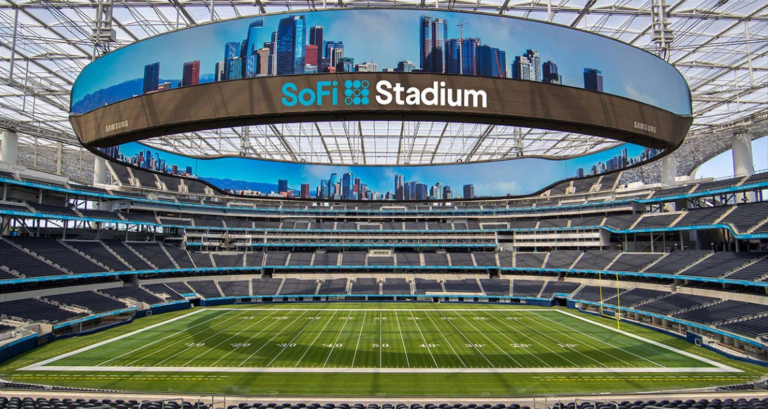
With North American stadiums in the global spotlight for World Cup 26, many venue owners are making investments that extend far beyond the pitch. The upgrades tied to hosting one of the world’s largest sporting events are accelerating a broader transformation already underway across sports and entertainment venues, where operational agility, premium hospitality and year-round functionality have become central to modern stadium design.
Increasingly, venue operators are looking beyond single-event solutions in favor of infrastructure that can support a wider range of audiences, event formats and revenue opportunities. From international soccer matches and NFL games to concerts and large-scale entertainment events, today’s stadiums are expected to transition seamlessly between uses, while continuing to elevate the fan experience.
“Stadium operators are no longer thinking about infrastructure as something fixed around a single tenant or event,” said Mike Mendoza, director of business development for Sightline Commercial Solutions. “Instead, flexible seating systems, premium hospitality sections and standing-room environments are becoming long-term solutions that help venues adapt to event demands and make better use of existing space.”
Turning underused areas into premium revenue
One of the clearest examples of this shift can be seen in how venues are reclaiming underutilized space. Field-level seating, loge environments and modular hospitality concepts are allowing operators to introduce new premium inventory without major structural expansion.
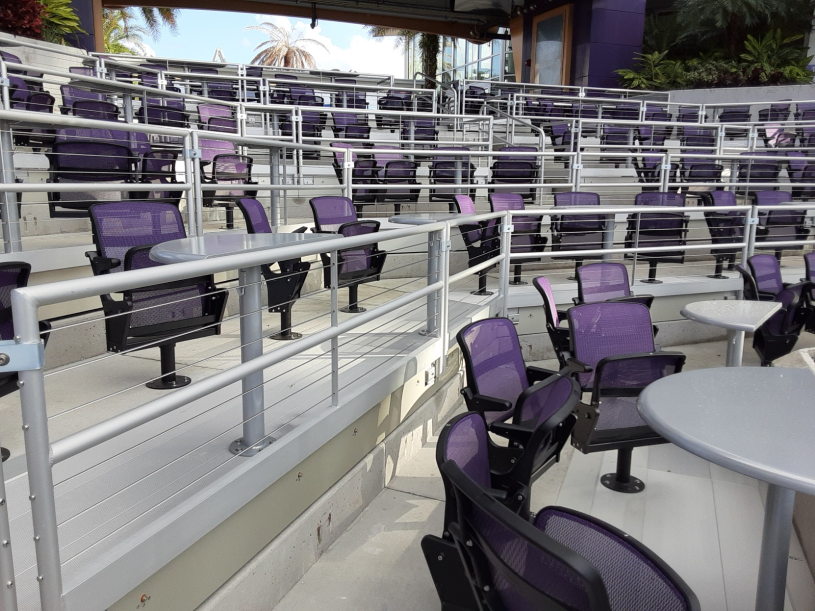
At Inter&Co Stadium in Orlando, a lower-level seating area beneath the scoreboard was transformed into a supporters-only section known as “The Terrace,” incorporating premium swivel seats and tables while maintaining unobstructed sightlines.
Houston’s Shell Energy Stadium took a similar approach by introducing field-level seating built on modular platforms to create an exclusive sideline environment capable of supporting everything from professional soccer to concerts and live entertainment.
This demand for convertible premium environments has also contributed to the emergence of modular hospitality concepts that allow venues to create customizable VIP spaces ranging from intimate lounge seating to larger social environments. Depending on venue needs, these installations can function as permanent or portable solutions.
“What we’re seeing across venues is that flexibility is increasingly tied to stronger monetization strategies and better fan experiences,” said Mendoza. “The goal is no longer just adding capacity; it’s creating infrastructure that can evolve alongside various events, audiences and operational priorities.”
The shift toward social viewing
Changing fan behavior is also influencing how stadiums are designed and utilized. Many spectators increasingly value social experiences that allow them to gather, move freely and remain connected to the action without necessarily occupying a traditional fixed seat for the duration of an event. As a result, venues are seeing growing demand for standing-room sections, drink rails and concourse-adjacent viewing environments that support a more casual and communal atmosphere.
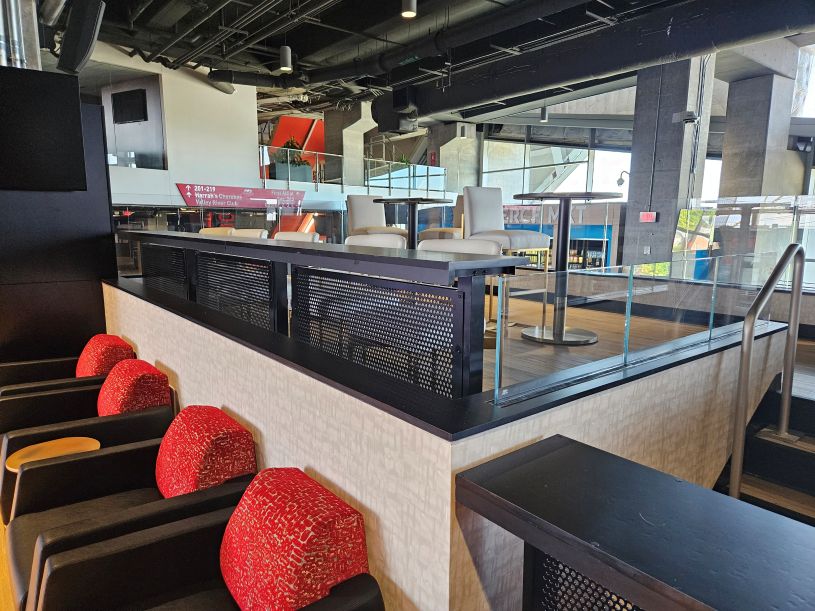
At Mercedes-Benz Stadium in Atlanta, an underutilized concourse area on the 200 level of the west end zone was transformed into a series of private and semi-private viewing environments known as the AT&T Lofts. The renovation incorporated custom glass guardrail systems alongside drink rail installations to create a hospitality-focused environment centered around comfort, flexibility and social interaction.
“Drink rail systems can easily be integrated into everything from concourses and club decks to loge seating areas and standing-room sections,” said Mendoza. “In addition to creating places for spectators to gather, they allow venues to activate locations that may not have previously generated ticket revenue.”
Stadiums built for constant change
While premium hospitality and social viewing environments continue to reshape the spectator experience, other infrastructure investments are focused on helping venues transition more efficiently between events.
At Arrowhead Stadium, preparations for the FIFA World Cup required additional sideline clearance to meet international field dimensions. Rather than permanently altering the seating bowl, 13 rows of concrete stadia were replaced with a demountable aluminum seating system that can be installed or removed as event requirements change.
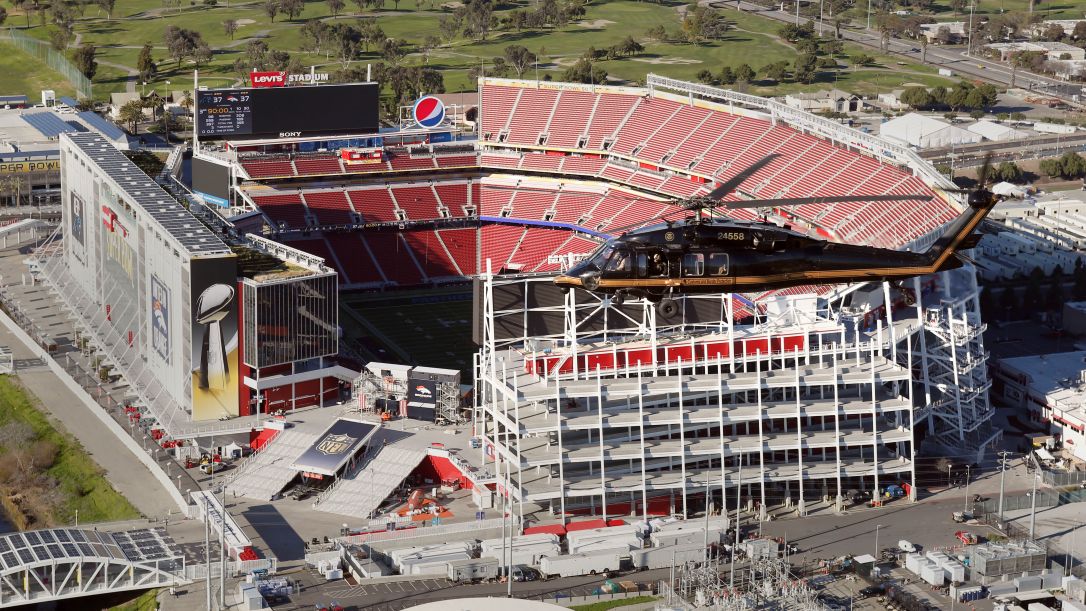
Similar approaches have been implemented at Levi’s Stadium in Santa Clara, California, and SoFi Stadium in Los Angeles, where portions of existing concrete seating were removed to create additional field clearance before being supplemented with demountable seating systems that can be deployed as needed.
“Every event brings its own distinct set of requirements for field dimensions, seating capacity, layout and broadcast operations,” Mendoza added. “Demountable systems enable facilities to expand usability, transition seamlessly between events and optimize revenue potential.”
Infrastructure beyond the fan experience
Adaptable seating and hospitality environments represent only part of the broader infrastructure transformation taking place inside today’s stadiums. Accessibility improvements, broadcast accommodations and operational enhancements are also becoming increasingly important as venues prepare for more diverse programming demands.
At Busch Stadium in St. Louis, ADA-compliant platforms and railing systems help create more inclusive viewing environments while complementing the venue’s architectural character. Meanwhile, at the University of Washington’s Husky Stadium, a freestanding two-tier camera platform provides elevated broadcast sightlines for soccer matches and other live events. Similar field-access and broadcast infrastructure upgrades have also been incorporated at Hard Rock Stadium in Miami to better support large-scale productions and sideline operations.
As venues continue preparing for the demands of global events, many of the infrastructure decisions being made today are expected to influence stadium operations long after the event concludes. Across the industry, the focus is shifting toward adaptable environments capable of supporting a broader mix of events, audiences and revenue models.
“The venues that will thrive long-term are the ones designed to evolve,” said Mendoza. “The real goal is creating infrastructure that remains valuable as audience expectations, event demands and venue operations continue to change.”
Article and photos provided by Sightline Commercial Solutions (www.sightlinecommercial.com).