
At the National Strength and Conditioning Association’s 2026 National Conference, held July 8-11 in New Orleans and online, TenCate highlighted how athlete-centered testing is helping shape turf systems built for the repeated demands of training and competition.
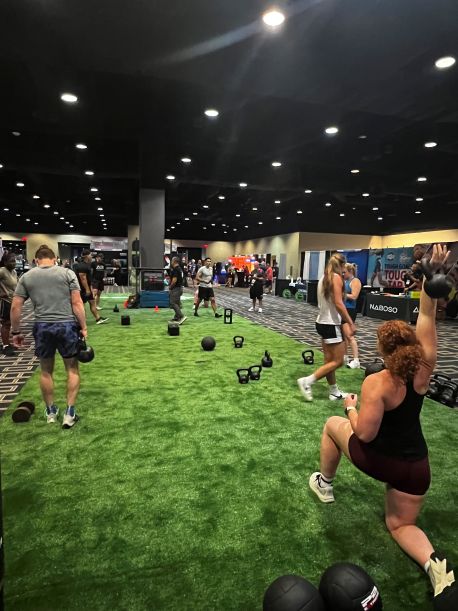
The conference brought together strength and conditioning coaches, researchers, educators, allied health professionals, performance specialists and students at a time when athlete performance decisions are increasingly shaped by data, testing and applied research. TenCate used that setting to show how playing surface design is becoming part of the same research-driven approach.
“Strength and conditioning professionals are already asking detailed questions about how athletes move, adapt and perform,” said Joe Fields, CEO of TenCate Americas. “We are applying that same research-driven approach to the surface beneath them. The more we understand how athletes interact with the field, the better we can design surfaces around real movement and support the broader goal of keeping athletes available to train and compete.”
That focus is changing how playing surfaces are studied. Traditional field testing remains important, but researchers and product developers are now looking more closely at how the surface feels and responds as athletes repeat starts, stops, cuts, landings and changes of direction.
For strength and conditioning coaches, the connection is direct. Athletes perform explosive movements across practices, workouts and competition, often under fatigue and in changing conditions. Those movements depend not only on the athlete, but also on how the surface feels and responds underneath them.
“Traditional turf testing gives us important information, but athletes bring a different perspective,” said Colin Young, Ph.D., Chief Technical Officer at TenCate. “They feel how the surface responds when they accelerate, cut, land and push off again. That is where our athlete-centered turf research becomes valuable.”
For performance staffs, the relevance is practical: Athletes repeat the same movements hundreds of times across practices, workouts and competition, and the surface is part of that work. When the field responds more predictably, athletes can move with greater confidence.
Tencate’s approach also helped guide the development of its Pivot Performance Turf, a next-generation turf system designed around athlete movement data.
“Athlete data is most valuable when it helps you make better design choices,” Young said. “For Pivot, that meant taking what we learned from real athlete movement and applying it in practical ways, from how the system is built to how the surface responds as athletes use it again and again.”
TenCate’s participation at NSCA followed recent engagement with sports surface researchers, strength and conditioning professionals and sports medicine audiences, each bringing a different perspective to how playing surfaces are evaluated.
“Our goal is to design surfaces around the work athletes do on the field,” Fields said. “That starts with studying how they use the surface and turning those findings into better turf systems.”