
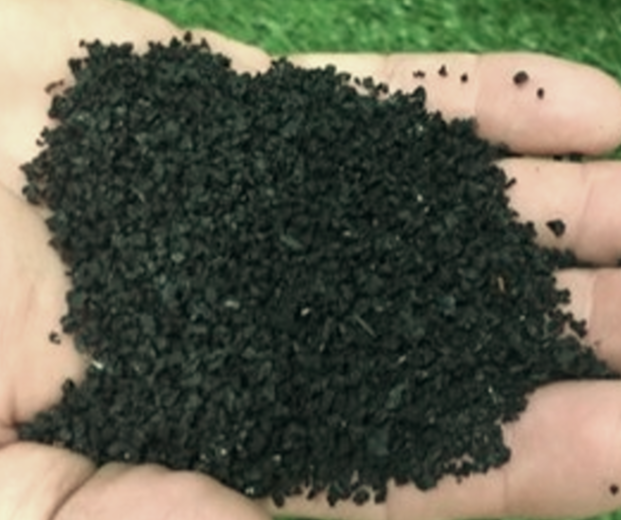
The California Office of Environmental Health Hazard Assessment (OEHHA) released a study finding that recycled tires used as crumb rubber in synthetic turf are not likely to harm users or spectators.
According to the study, there is no evidence of significant risk for cancer or other health problems from this recycled rubber to players, coaches, referees and spectators based on the available data, even for young athletes.
“This study should ease concerns about the safety of crumb rubber use in synthetic turf fields,” said OEHHA Director Kris Thayer, “Athletes of all ages can use these fields without parents worrying about this commonly used material.”
OEHHA studied crumb rubber infill material to inform California’s sustainability goals. California’s Waste Tire Program sets standards for safely managing waste tires and explores appropriate markets for materials that might otherwise be landfilled.
“Protecting public health is our top priority, and California is committed to making sure waste tires are managed safely so they don’t litter communities or pose risks to residents,” said CalRecycle Director Zoe Heller. “CalRecycle appreciates the work of OEHHA and its partners to advance our understanding in support of a cleaner, healthier circular economy.”
To evaluate safety, OEHHA tested 35 synthetic turf fields. The sampling accounted for both old and new fields, as well as fields from every climate region in California. Multiple samples from each field were collected to account for variations in source materials. OEHHA also collected air samples both during active use of the field and when no use occurred. OEHHA’s groundbreaking study focused on more than 100 chemicals that could pose a risk — unlike past studies that only looked at a small number of chemicals. To identify the full suite of chemicals present, OEHHA coordinated with the Lawrence Berkeley National Lab to simulate sweat and digestion and identify chemicals to which the public could be exposed.
To understand how people might be exposed to chemicals found, OEHHA worked with researchers from UC Berkeley and the University of Arizona. They studied how soccer players might contact crumb rubber — through skin, breathing, or swallowing small pieces. The team surveyed more than 1,000 soccer players, ages 7 to 71, about how they play, like sliding or diving on the field. They also recorded players during games and practices to see how often they touched the turf. Because goalies dive the most, the study used goalie data to estimate risk for players. Researchers also looked at chemical risk to toddlers who might crawl on the field.
OEHHA found no acute risk to athletes, referees, coaches, or spectators, including toddlers. In most cases, risk of sensory irritation, cancer, harm to the reproductive system or a developing fetus, or other health effects were negligible.
The California Office of Environmental Health Hazard Assessment (OEHHA) is the lead state agency for the assessment of health risks posed by environmental contaminants.